How Do Solar Batteries Store Energy and Save Money?

Time:2026-10-07 Author:Liam
0%

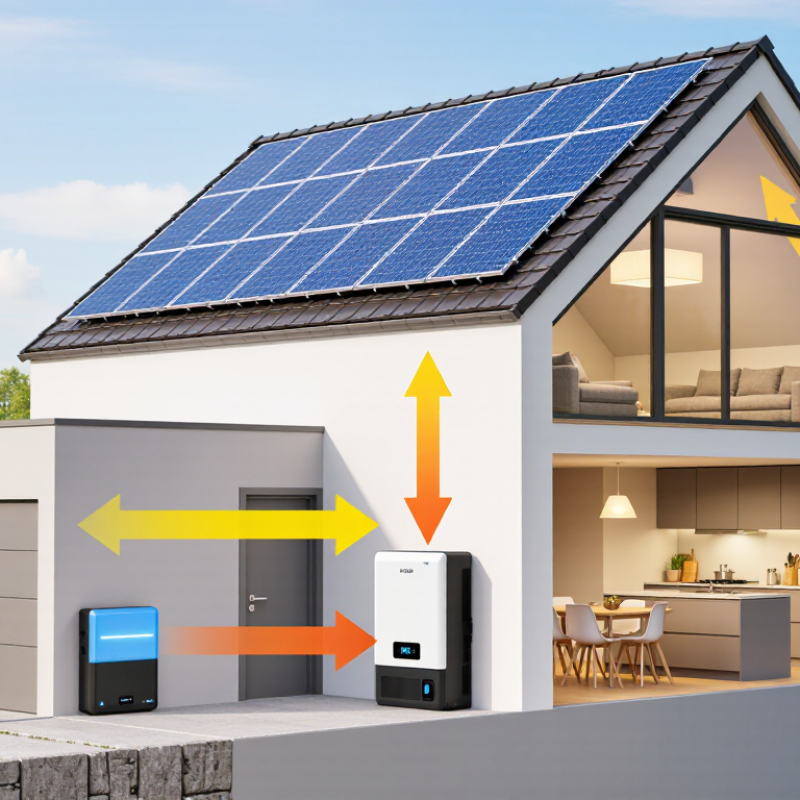
Solar panels often produce their most electricity around midday, when many households use less power. A solar battery captures that unused energy and keeps it available for later. But how do solar batteries store energy? In most home systems, lithium-ion cells move electrical energy into chemical energy during charging. An inverter then converts stored direct current into usable alternating current for household appliances. At sunset, the battery reverses this process. Your lights, refrigerator, and internet equipment can keep running from energy collected hours earlier.

This guide explains how battery storage works, how it can reduce grid purchases, and when the investment may make financial sense. Savings depend on local electricity prices, export rates, battery capacity, and daily household habits. For example, a battery may charge at noon and discharge during an expensive evening period. That simple shift can lower peak-rate consumption. It may also provide limited backup power during an outage, depending on system design. Not every battery saves money quickly. Installation costs, maintenance, efficiency losses, and gradual capacity decline matter. Real results can differ from sales estimates.

Reliable decisions require more than a glossy payback calculator. Check manufacturer specifications, warranty terms, usable capacity, and safety certifications. A qualified installer should assess wiring, ventilation, weather exposure, and emergency shutdown access. I have found that the most useful evaluations compare a full year of electricity bills with realistic battery performance. Small errors in usage assumptions can change the outcome. Energy storage is practical, but it is not magic. Understanding its limits helps homeowners protect their budgets and choose equipment with greater confidence.
How Do Solar Batteries Store Energy and Save Money?

What Solar Batteries Are and How They Fit into a Solar Power System

Solar batteries are rechargeable units that store electricity produced by solar panels. They do not create energy. They save surplus power for later use. A typical system includes panels, an inverter, a battery, a meter, and household circuits.

During a sunny afternoon, panels may produce more electricity than a home needs. The battery captures that excess instead of sending it to the grid. After sunset, stored power can run lights, a refrigerator, or a small heat pump. Think of it as a private energy reservoir. Timing changes everything. Some systems connect on the DC side, while others use AC connections. The inverter manages these energy changes and supplies usable electricity to appliances.

Savings depend on local electricity prices, export payments, battery size, and daily consumption. A battery can reduce purchases during expensive evening hours. It may also provide backup power during an outage, if the system supports islanded operation. However, savings are not automatic. Charging and discharging cause energy losses, and battery capacity gradually declines. A larger battery is not always better. Compare usable capacity, round-trip efficiency, depth-of-discharge limits, maintenance needs, and warranty terms. Professional installers should assess roof output, wiring, ventilation, fire protection, and local requirements. The simple picture is useful, but incomplete. Household habits matter too; shifting laundry to daylight may cost less than adding storage. This detail often changes the calculation.

How Solar Batteries Capture and Store Excess Electricity

Solar panels often produce their most electricity around midday, when household demand may be low. A solar battery captures this surplus before it flows back to the grid. The panels generate direct current, while most homes use alternating current. An inverter changes the electricity between these forms. A charge controller then manages the battery’s charging rate and protects it from unsafe conditions.

Inside the battery, electrochemical reactions store energy for later use. A monitoring system tracks voltage, temperature, and state of charge. At sunset, the system sends stored electricity back through the inverter. Lights, refrigerators, and routers can continue working after the panels stop producing power. Quietly, overnight.

The financial benefit depends on local electricity prices, export payments, battery size, and daily usage. Using stored power during expensive evening hours may reduce grid purchases. However, every charge and discharge causes gradual wear. Round-trip efficiency also means some electricity becomes heat instead of usable power. The arithmetic is not always tidy. A larger battery may store more energy but cost more than the savings it creates. Shading, cloudy weather, installation quality, and backup settings can change the result. Reviewing several months of hourly electricity data gives a more reliable estimate than guessing from one bill. A careful installer should explain usable capacity, emergency power limits, maintenance needs, and expected performance under changing temperatures.

How Do Solar Batteries Store Energy and Save Money?

How solar batteries capture and store excess electricity during a representative day

This representative profile uses hourly energy values for a home with a 5 kW rooftop solar array and a 10 kWh battery. Solar power first supplies household demand. Excess electricity charges the battery, while stored energy is discharged after sunset to reduce grid purchases. A typical lithium-ion system operates at about 85%–95% round-trip efficiency, so some energy is lost during charging and discharging. The greater the amount of stored solar used during high-rate evening periods, the greater the potential electricity-cost savings.

How Stored Solar Energy Is Used During Outages and Peak Hours

How Do Solar Batteries Store Energy and Save Money?

How Stored Solar Energy Is Used During Outages and Peak Hours

Solar panels often produce their most power around midday, when many homes use less electricity. A solar battery stores that extra energy for later use. Inside the battery, electrical energy changes into chemical energy during charging. An inverter changes it back into usable electricity when the home needs it. The process is efficient, but not perfect. Some energy is lost as heat and during conversion.

During a power outage, the battery can supply selected circuits, such as refrigerators, lights, internet equipment, and medical devices. A properly installed transfer system separates those circuits from the grid. This protects utility workers and keeps the backup system operating safely. Battery size matters. A small unit may run essential lights overnight, while larger systems can support heating or cooling for fewer hours. Cold weather and heavy appliances can reduce available runtime.

Peak hours can create another financial benefit. Electricity rates are often higher in late afternoon or evening. The battery can discharge during these periods, reducing electricity purchased from the grid. It can recharge when solar production is strong or rates are lower. Savings depend on local tariffs, battery efficiency, installation costs, and actual household usage. The calculation is rarely perfect. A homeowner should review several months of bills instead of relying on a quick estimate. Standby power also slowly drains the battery. Small details matter.

How Solar Batteries Reduce Electricity Costs and Improve Energy Independence

Solar batteries reduce electricity costs by storing surplus daytime power for evening use. Without storage, excess solar may flow to the grid at a lower credit rate. With storage, the same energy can run lights, appliances, and a heat pump after sunset.

The U.S. Energy Information Administration reported an average residential electricity price of 16.48 cents per kilowatt-hour in 2024. A battery can reduce purchases during expensive evening periods. It also provides backup power during short outages.

More control. Less exposure.

The National Renewable Energy Laboratory’s 2024 cost benchmark shows that adding storage increases a home system’s upfront cost significantly. However, battery savings depend on local tariffs, usable capacity, efficiency, and cycling limits. A 10-kilowatt-hour battery may not deliver 10 kilowatt-hours daily. Some energy becomes heat, and capacity declines over time. The International Energy Agency also identifies battery storage as important for integrating growing solar generation and improving grid flexibility. Yet, savings calculations can be overly optimistic. They should include installation, maintenance, replacement, and financing costs. A household with low evening consumption may save less than expected. A home facing frequent peak prices may gain more energy independence.

Key Factors Affecting Solar Battery Performance, Lifespan, and Savings

How Do Solar Batteries Store Energy and Save Money?

Solar batteries store surplus electricity as chemical energy, then release it when solar production falls. The main performance measure is round-trip efficiency. The U.S. Department of Energy commonly reports about 85–95% for lithium-ion systems, depending on equipment and operating conditions. A 10-kilowatt-hour battery may therefore deliver less than 10 kilowatt-hours after charging losses. That difference matters during cloudy evenings.

Temperature, cycling depth, and charging speed strongly affect lifespan. The National Renewable Energy Laboratory identifies heat and repeated deep discharge as major degradation factors. A shaded, ventilated installation usually experiences less stress than a battery placed in a hot garage. The International Energy Agency reported that battery pack prices fell 14% in 2023, but lower prices do not guarantee better household savings. Warranty limits, usable capacity, and replacement costs still deserve careful review. Small details matter.

Savings depend on local electricity tariffs. A battery can shift solar power from midday to expensive evening hours. However, weak export credits may provide a stronger financial case than high export credits. NREL’s 2024 cost projections often model storage over a 15-year financial life, yet real results vary with daily use and maintenance. A spreadsheet can still mislead. Household demand is rarely predictable. One family may cycle a battery daily, while another uses it only during outages. That difference can change the payback period by years.

How Do Solar Batteries Store Energy and Save Money? Key Factors Affecting Solar Battery Performance, Lifespan, and Savings

Factor What It Means Typical Real-World Range Effect on Performance and Lifespan Effect on Potential Savings Practical Guidance
Battery Chemistry The materials used to store and release electrical energy. Lithium iron phosphate (LFP): commonly selected for stationary storage because of its safety and cycle-life characteristics. High impact High impact Compare usable capacity, warranty terms, operating temperature, and cycle rating rather than judging a battery by chemistry alone.
Nominal Capacity The total amount of energy a battery can theoretically store, measured in kilowatt-hours (kWh). 5–20 kWh for many residential systems Medium impact High impact Size the battery according to evening electricity demand, solar production, and the desired backup duration.
Usable Capacity The energy available after accounting for the battery’s operating limits and reserve settings. Approximately 80–95% of nominal capacity High impact High impact Use usable kWh for comparisons. A battery with a larger nominal capacity may provide less usable energy than expected.
Round-Trip Efficiency The percentage of energy recovered after charging and discharging the battery. Approximately 85–95% for modern battery systems High impact High impact Higher efficiency reduces solar energy lost during storage and improves the value of each stored kilowatt-hour.
Depth of Discharge The percentage of stored energy used during a discharge cycle. Often 80–95% of usable capacity, depending on system settings High impact Medium impact Frequent deep discharges can increase wear. Follow the manufacturer’s recommended operating window.
Charge and Discharge Power The maximum rate at which the battery can absorb or deliver electricity, measured in kilowatts (kW). Common residential systems: about 3–10 kW Medium impact High impact Higher power is useful for running multiple appliances, but power rating and energy capacity are separate specifications.
Cycle Life The number of charge-and-discharge cycles a battery can complete before reaching a specified remaining-capacity level. Often about 3,000–10,000 cycles, depending on chemistry and operating conditions High impact High impact Check the test conditions, depth of discharge, end-of-warranty capacity, and throughput limit when comparing cycle claims.
Calendar Aging Capacity loss that occurs over time even when the battery is not heavily used. Capacity gradually declines over several years; the rate varies by chemistry, temperature, and state of charge High impact Medium impact Avoid long periods at very high or very low charge levels, especially in hot conditions.
Operating Temperature The ambient and internal temperature range in which the battery operates efficiently and safely. Many systems operate best near 15–30°C; exact limits vary by design High impact Medium impact Install the battery in a shaded, ventilated location. Excessive heat can accelerate degradation, while cold can reduce temporary power and capacity.
Solar Self-Consumption The share of generated solar electricity used directly on-site or stored instead of exported to the grid. Can increase substantially when daytime surplus is shifted to evening use Low direct impact High impact A battery creates greater value where exported solar receives less compensation than electricity purchased from the grid.
Electricity Price Difference The gap between the price paid for grid electricity and the value received for exported solar energy. Varies by utility tariff, time of use, taxes, and export rules Low direct impact High impact Storage savings are generally stronger when evening electricity prices are high and export compensation is relatively low.
Daily Energy Throughput The amount of energy cycled through the battery each day. Approximately 0.5–1.0 full equivalent cycle per day for many solar-storage applications High impact High impact Regularly using available capacity can improve economic utilization, provided the system remains within its recommended limits.
Backup Reserve Setting The portion of battery capacity held back for power outages rather than daily bill reduction. Commonly configured between 10% and 30%, depending on backup priorities Low direct impact Medium impact A higher reserve improves outage readiness but reduces the energy available for routine self-consumption savings.
Inverter and System Losses Energy lost during conversion between the solar array, battery, household loads, and the grid. Included in overall round-trip efficiency; losses vary by load and operating mode Medium impact Medium impact Review system-level efficiency, standby consumption, and partial-load performance instead of focusing only on battery cell efficiency.
Maintenance and Replacement Costs Expenses associated with inspection, monitoring, repairs, inverter replacement, or eventual battery replacement. Varies by installation, warranty, labor rates, and system architecture Medium impact High impact Estimate total ownership cost over the expected service period and include possible inverter or battery replacement outside warranty coverage.

Note: The ranges shown are general industry estimates for residential energy-storage applications. Actual results depend on system design, climate, electricity tariffs, installation quality, operating settings, and local regulations.

FAQS

How can a solar battery reduce household electricity costs?

It stores extra daytime solar power for evening lights, appliances, and heating. This can reduce purchases during expensive evening hours. Savings vary.

How much energy can a 10-kilowatt-hour battery provide?

Usually, less than 10 kilowatt-hours reaches your appliances after charging losses. Typical efficiency ranges from 85% to 95%. Some energy becomes heat.

Why do local electricity prices matter?

Tariffs determine the value of stored energy. A battery may save more where evening electricity prices are high. Export credits also change the calculation.

Can a solar battery provide backup power during outages?

Yes, if the system includes suitable backup equipment. It can keep selected lights, appliances, or a heat pump operating. It may not power everything.

What reduces a battery’s lifespan?

High temperatures and repeated deep discharges create extra stress. A shaded, ventilated area is usually better than a hot garage. Conditions matter greatly.

Does a lower battery price guarantee better savings?

No. Installation, maintenance, financing, and future replacement costs still matter. A cheaper battery can produce disappointing results. The spreadsheet may look too cheerful.

Which households may benefit most from battery storage?

Homes with strong evening demand or frequent peak prices may gain more independence. A household using little electricity after sunset may save less. Daily habits matter.

How long does it take to recover the battery investment?

The payback period depends on tariffs, usage, efficiency, and cycling frequency. Daily use may shorten it. Occasional outage use may extend it by years.

What should a realistic savings estimate include?

Include usable capacity, efficiency losses, degradation, installation, maintenance, replacement, and financing. Compare several usage patterns. Results are estimates, not promises.

Conclusion

Solar batteries are energy storage devices that work alongside solar panels to make a home’s power system more flexible and efficient. To understand how do solar batteries store energy, solar panels first generate electricity during daylight, while the battery captures unused power and stores it in chemical form for later use. An internal control system manages charging, discharging, and energy flow so the system can operate safely and efficiently.

The stored electricity can power lights, appliances, and essential equipment at night, during cloudy periods, or when the grid experiences an outage. Using stored energy during expensive peak hours can reduce electricity bills and increase household energy independence. Actual savings and performance depend on battery capacity, system design, daily energy use, weather conditions, charging habits, maintenance, and battery lifespan. Choosing an appropriately sized system and using energy wisely can help improve long-term reliability, reduce wasted solar power, and make the overall investment more valuable.

Liam

Liam

Liam is a dedicated marketing professional with a profound expertise in the industry, where he excels at highlighting the unique advantages of our core products. With a keen understanding of market trends and consumer needs, Liam frequently updates our company’s professional blog, providing......